

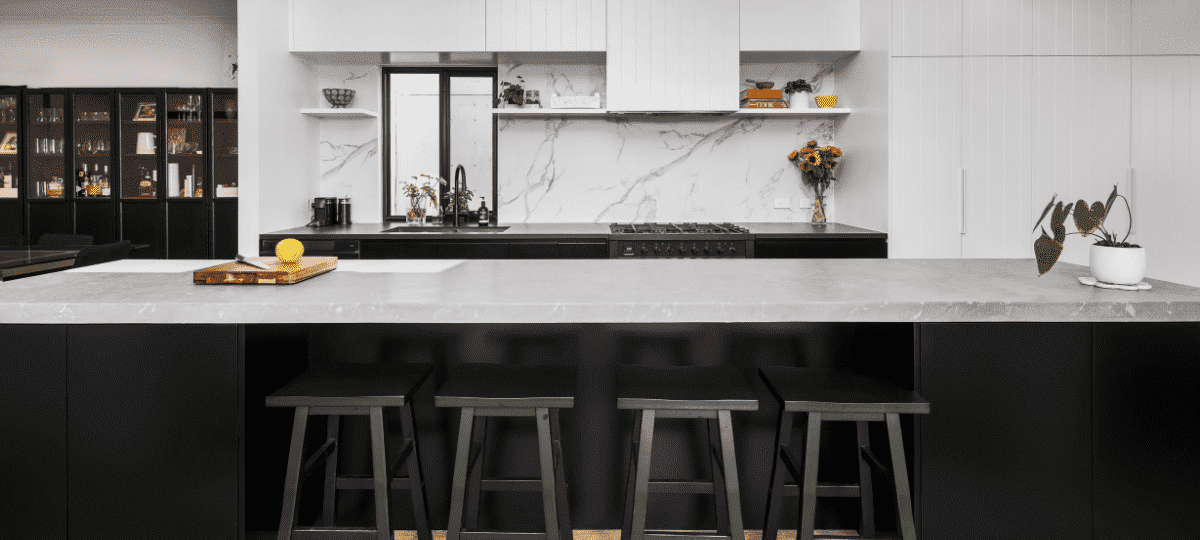
Kitchen Benchtop – How to choose one for your kitchen?
The benchtop is the largest horizontal surface in your kitchen and it’s usually the main visual feature of the space. It also does the hardest work, which is why choosing the right benchtop material is one of the most consequential decisions in any kitchen renovation.
Choosing a kitchen benchtop comes down to three things: your budget, your cooking habits and your style preferences. Get those clear and the shortlist narrows quickly. This guide walks through every material available in Australia today, what each one costs you in maintenance, and how the 2024 engineered stone ban has reshaped the options.
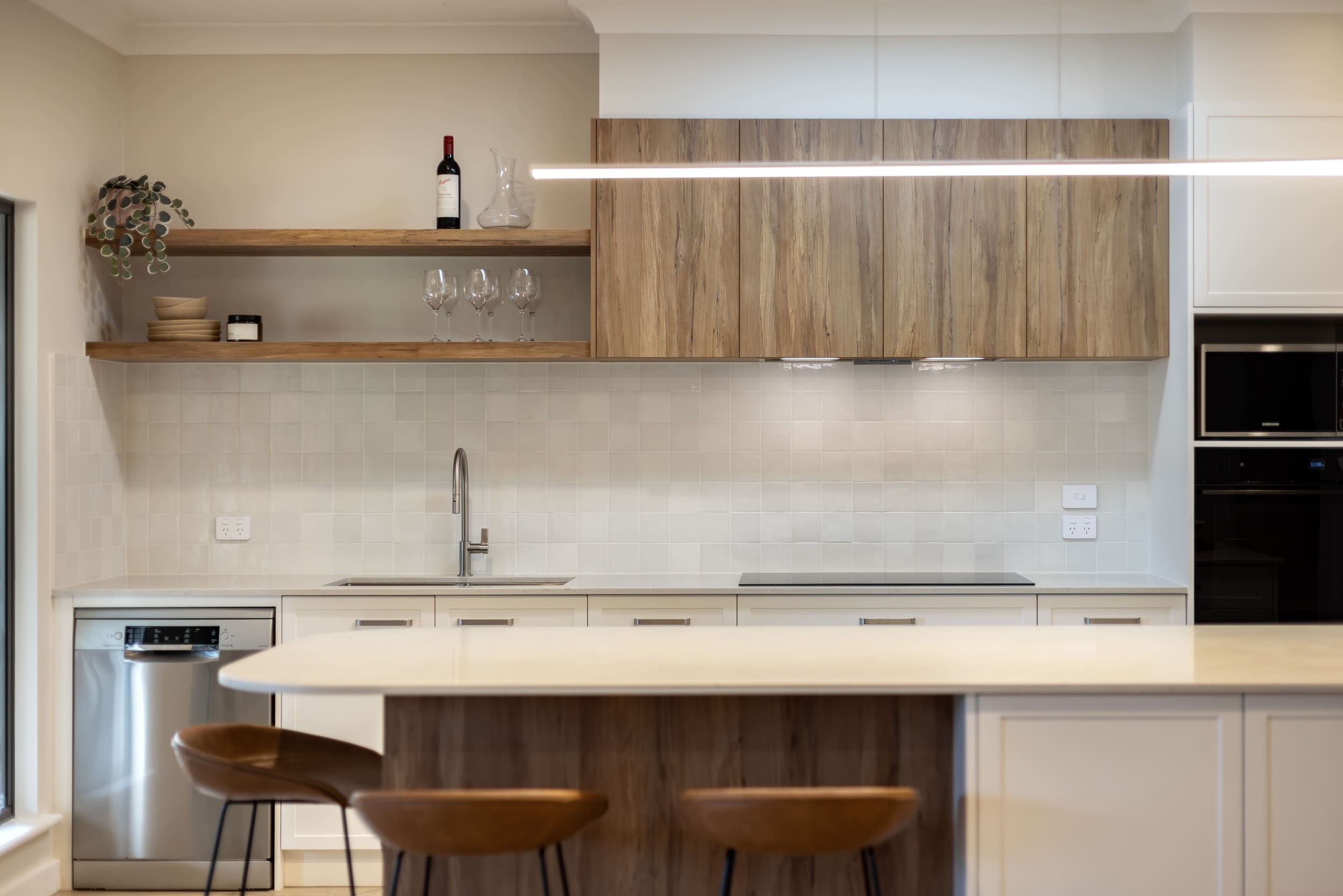 Stone Ambassador Benchtops, Zenith Surfaces in Marrakesh
Kitchen Benchtop Basics
Before you fall in love with a colour, get clear on your priorities. The factors worth weighing:
- Durability — how well the surface withstands daily wear and tear
- Heat resistance — whether hot cookware can go straight onto the surface
- Stain resistance — and whether the material needs sealing to achieve it
- Maintenance — sealing, oiling, or a simple wipe with mild soap
- Aesthetics — the degree of luxury or statement you want to create
- Sustainability — recycled content, silica content, end-of-life
- Cost — including fabrication and installation, not just the slab
High-quality benchtops withstand daily wear and tear for the full life of the kitchen. Cheaper surfaces don’t and replacing a benchtop after seven years costs more than specifying properly the first time.
Kitchen Benchtop Materials
Porcelain and sintered stone
Porcelain slabs and sintered stone have become the dominant premium choice in Australian kitchens. Both are made by compacting mineral particles under extreme pressure and heat, with no resin binders, which is why they sit outside the engineered stone ban.
Sintered stone provides excellent resistance to heat, stains and scratching. Cosentino’s Dekton is a large-format ultra-compact surface from a leading brand, valued for its versatility across different finishes and applications, with high resistance to stains and the ability to withstand hot objects placed directly on it without damage. Sleek kitchens benefit from uninterrupted porcelain or stone slabs, and the large format means fewer joins across an island.
Pros: Extremely robust: resistant to scratching, cracking, chipping and staining, and able to withstand high temperatures. No sealing required and very easy to maintain. Can be cut into smaller slabs for splashbacks or flooring, giving you a seamless design aesthetic across the space that complements the rest of the kitchen scheme. New patterns are released regularly.
Cons: Because the pattern is printed on the surface of some porcelain products, you may see a bare edge depending on the profile chosen; mitred edges solve this. You’re limited by slab size, so allow for joins in longer runs.
Top brands: Dekton, Neolith, Laminam, Vasari, Ibrido, Infinity
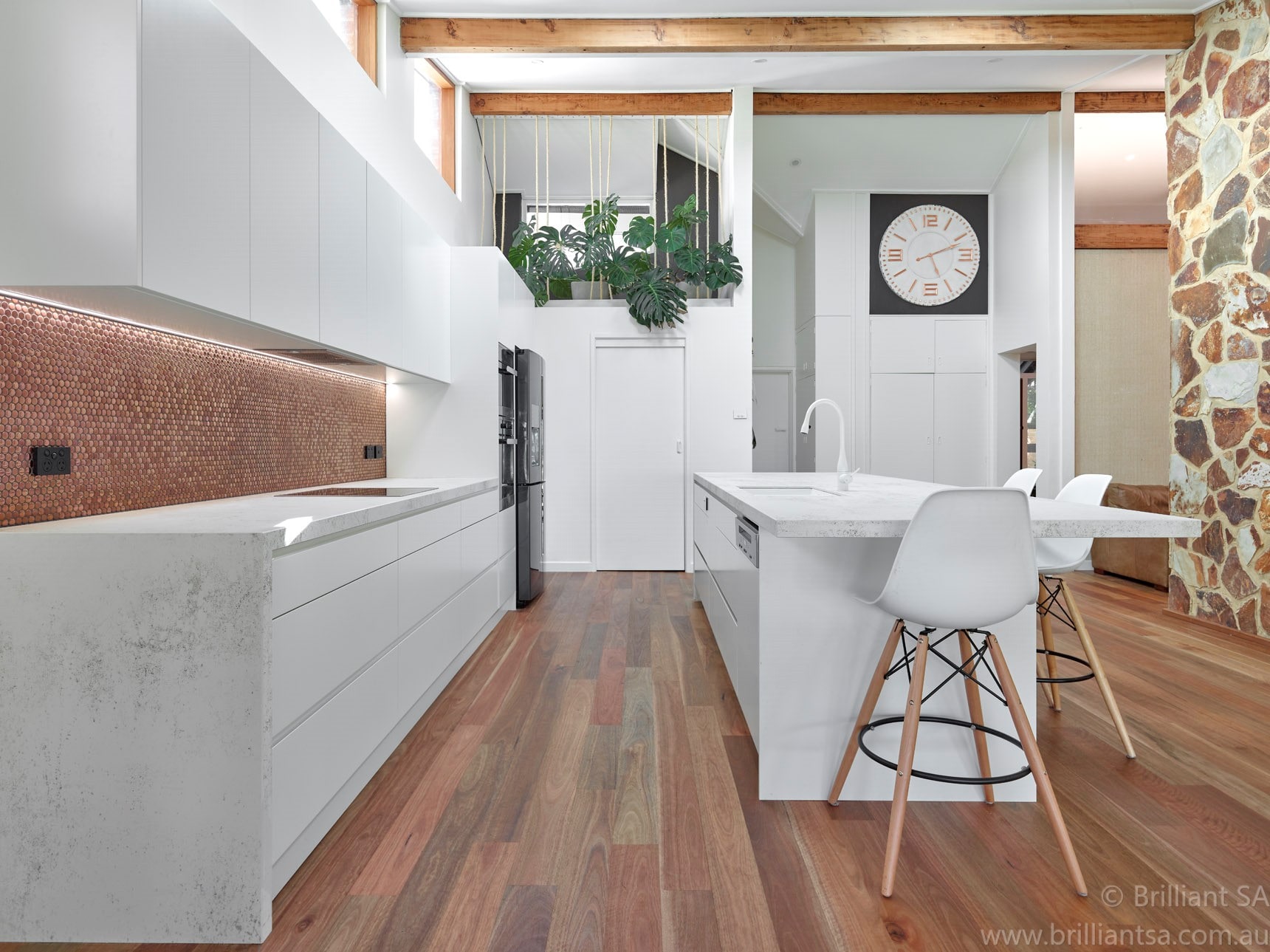
Porcelain Benchtop, Dekton, in Nilium
Natural stone
Granite, marble, limestone and quartzite are the natural stone options. Granite is a natural stone slab offering unique durability and genuine aesthetic appeal. It’s also the hardest of the common natural stones and ideal for busy kitchens. Marble is the softest and most susceptible to scratches and etching, so we generally recommend it for islands and low-traffic zones rather than the main prep area.
The trade-off is porosity: granite requires periodic sealing to prevent staining, and marble countertops require ongoing maintenance because of their tendency to scratch and stain. Some suppliers have addressed this, for example Sensa by Cosentino is natural stone with an exclusive stain-resistant treatment applied at the factory, which removes most of the sealing burden.
The natural stone look provides unique patterns you simply cannot get from a synthetic surface. No two slabs are the same, which is both the appeal and the reason you should visit the supplier to explore the slabs in person and hand-select yours.
Pros: Nothing looks or feels like natural stone. It adds real elegance and a talking point, on a hardwearing surface.
Cons: Material-specific maintenance requirements and periodic sealing. Limited by slab size.
Top suppliers: Cosentino, Complete Marble & Granite (Adelaide) and CDK Stone.
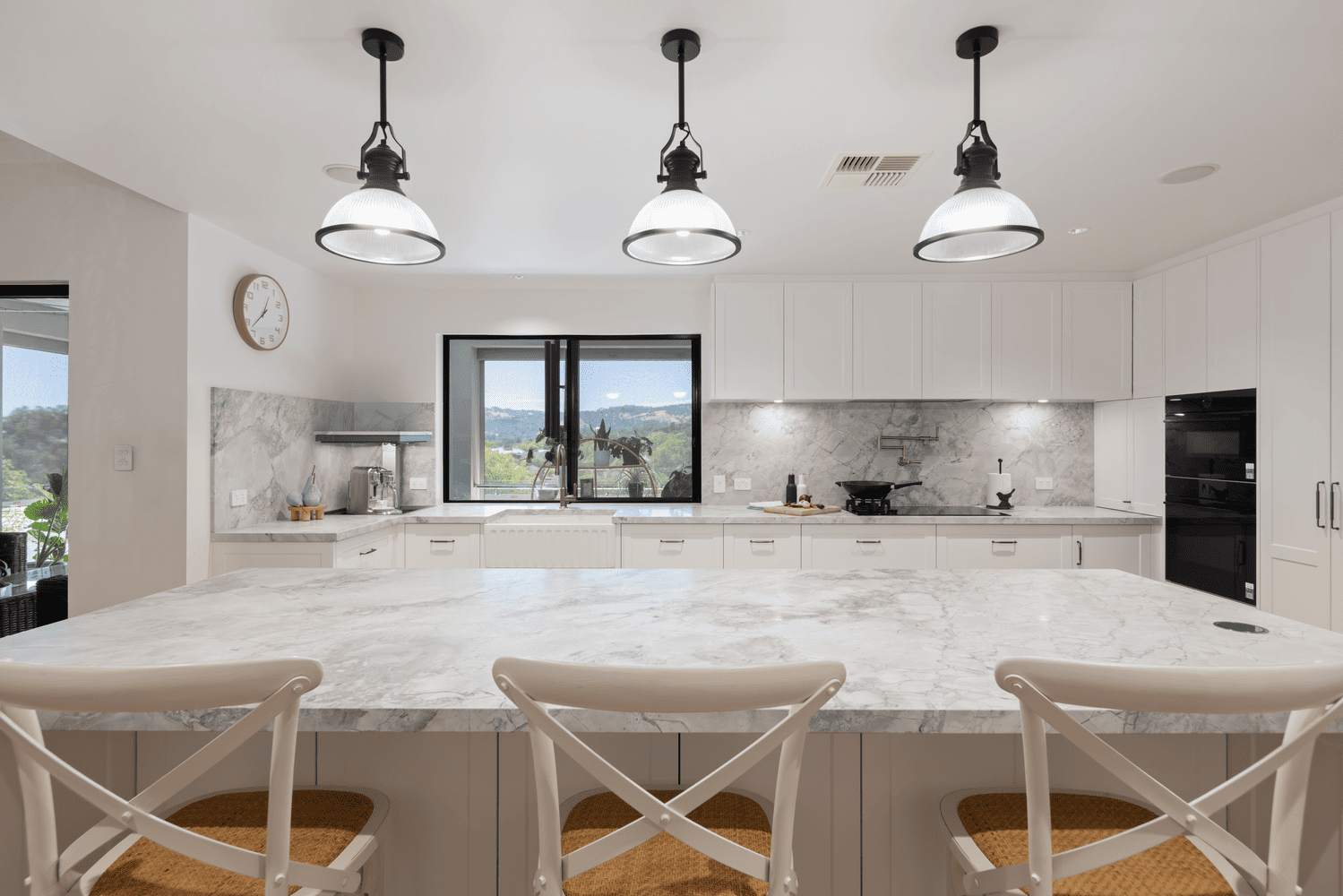
CDK Stone, Dolomite Kitchen Benchtop & Splashback
Mineral surfaces (zero crystalline silica)
This is the newest category and the direct replacement for engineered stone. Regulatory shifts have favoured zero-silica engineered alternatives as safer materials, and the major manufacturers have reformulated accordingly.
Éclos by Cosentino is a mineral surface with zero crystalline silica content, containing a minimum of 50% recycled materials and close to 90% in some colours, with heat resistance up to 220°C. Silestone QXeron contains up to 88% recycled materials.
Caesarstone Mineral™ is a crystalline silica-free collection made from a blend of natural minerals and recycled materials including glass, manufactured under Caesarstone’s eco-friendly practices and backed by a lifetime warranty. Caesarstone surfaces feature superior stain, scratch and heat resistance, and are easy to clean with a simple wipe which are key advantages for homeowners wanting lower-silica, low-maintenance options, without the silica. The collection spans marble-look, stone and industrial-inspired designs.
Pros: Consistent, predictable appearance across slabs. Non-porous, no sealing, wide colour range, strong stain and heat resistance. Safer to fabricate.
Cons: Still limited by slab size. Newer to market, so the colour collection is smaller than the old engineered stone ranges.
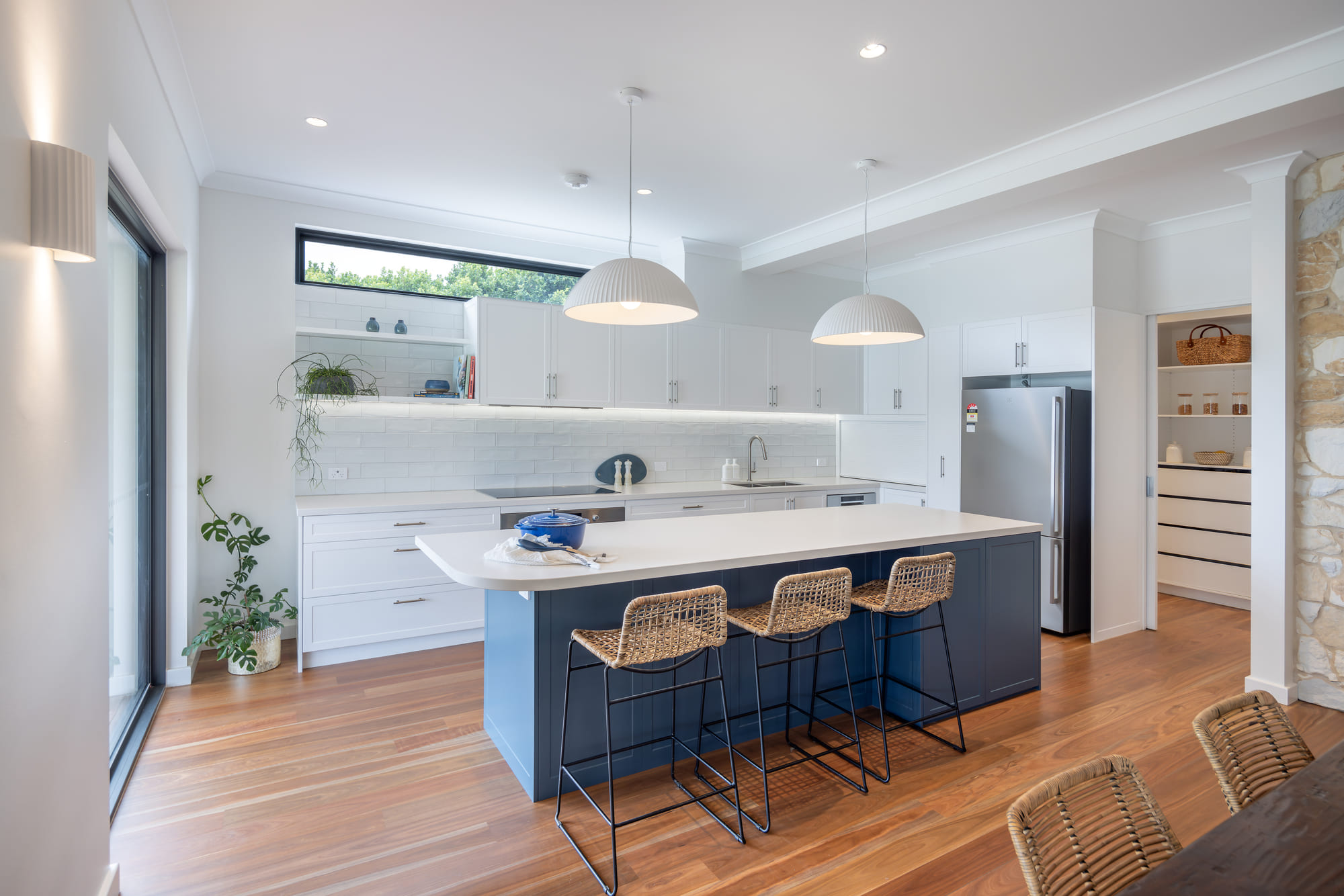
Silestone Kitchen Benchtops, Miami Vena, Suede Finish
Solid Surface
Solid surface materials are made from natural minerals refined from bauxite blended with pure acrylic resin. They contain no crystalline silica, making them a worker-friendly choice for bespoke benchtops.
The seamless joining method means they can be fabricated to any length or shape, and thermoformed into curves which are genuinely useful in a custom kitchen, where it improves functionality in busy custom kitchens. Non-porous, stain resistant, hygienic, and repairable if scratched or chipped.
Pros: Hygienic, easy to clean, lightweight, recyclable and endlessly shapeable with no visible joins, with standout design features including easy repairability and shape flexibility. A warmer, softer feel than stone or steel.
Cons: Can chip and scratch (though repairable), and is susceptible to heat damage. Always use a trivet.
Top brands: Staron, Corian, Hi-Macs
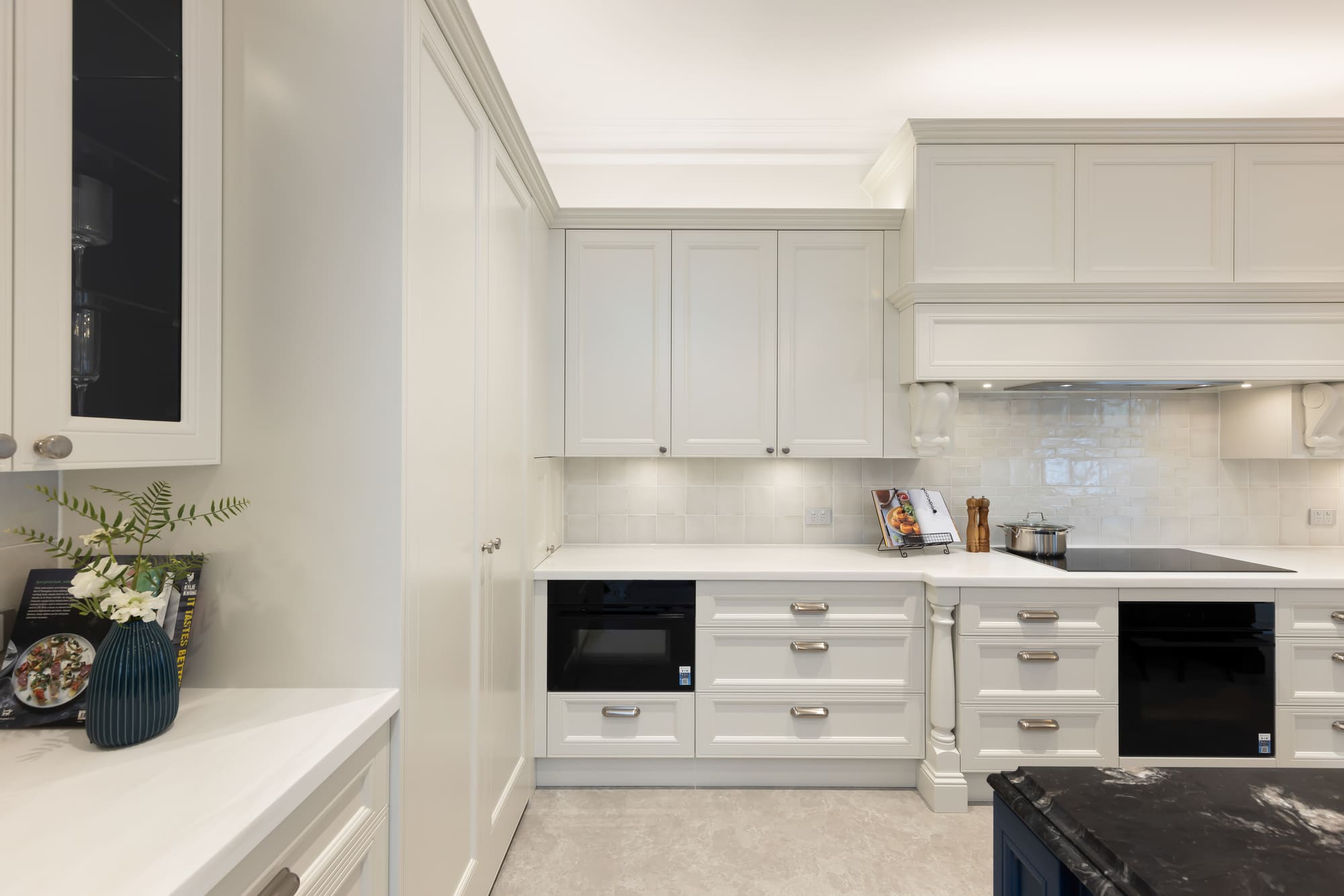
Corian, Solid Surface, River Perl, Satin Finish
Stainless Steel
The king of the commercial kitchen. Hardy, hygienic and seamless, stainless steel suits industrial and ultra-modern kitchens, making it a strong choice for businesses as well as home kitchens, and works beautifully as a complementary surface in the cooking zone paired with a softer material elsewhere.
Pros: Incredibly durable, hygienic, heat resistant and chemical resistant. Sinks and cooktops can be integrated seamlessly.
Cons: Shows streaks, scratches and marks with heavy use, though many owners regard the patina as character.
Grade 304 is the standard used for kitchens worldwide.
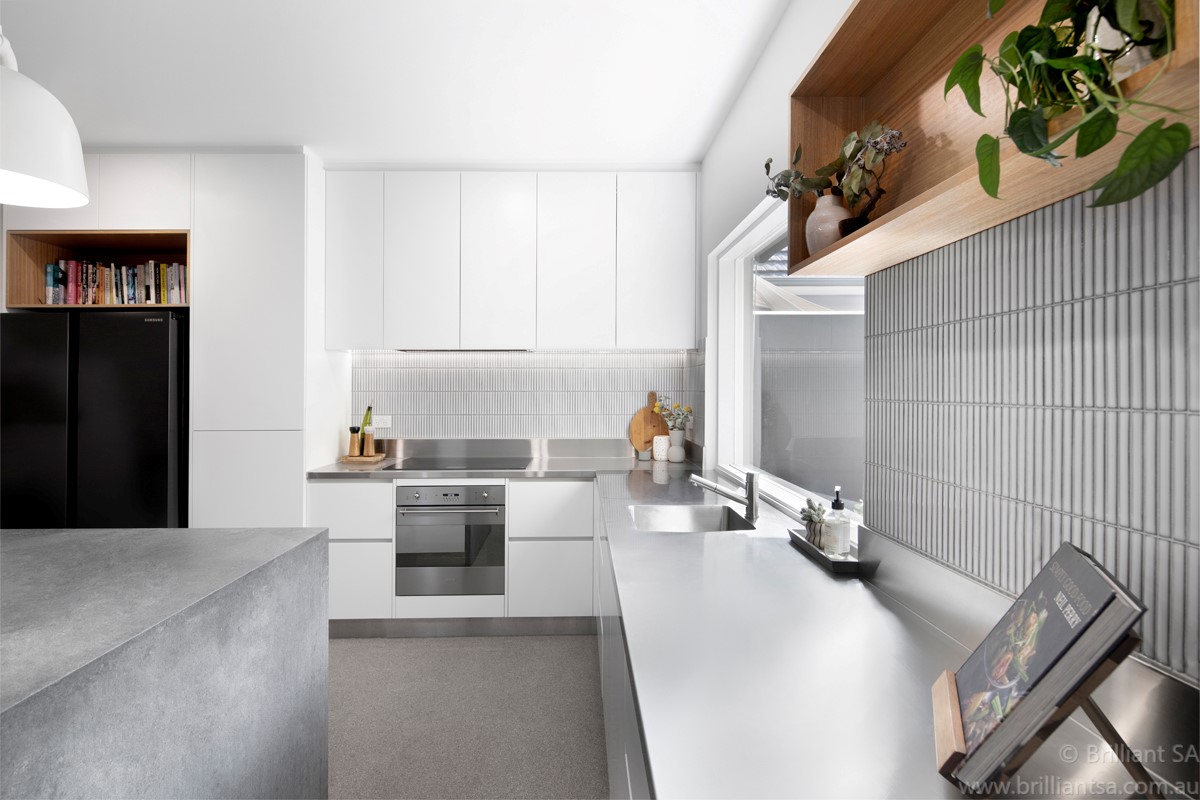
Custom L-Shaped Stainless-Steel Benchtop
Concrete
Sleek and highly durable, concrete benchtops are popular for their industrial look and durability, and when used well can transform a contemporary kitchen, particularly in contemporary kitchens and alfresco areas. The concrete is reinforced with glass fibres, poured into a custom mould, then polished and sealed in gloss or matte.
Pros: Poured without joins, even in complex shapes. Endlessly customisable and heat resistant.
Cons: Porous, so correct sealing is essential to protect against stains. Can chip or hairline-crack, though repairs are straightforward.
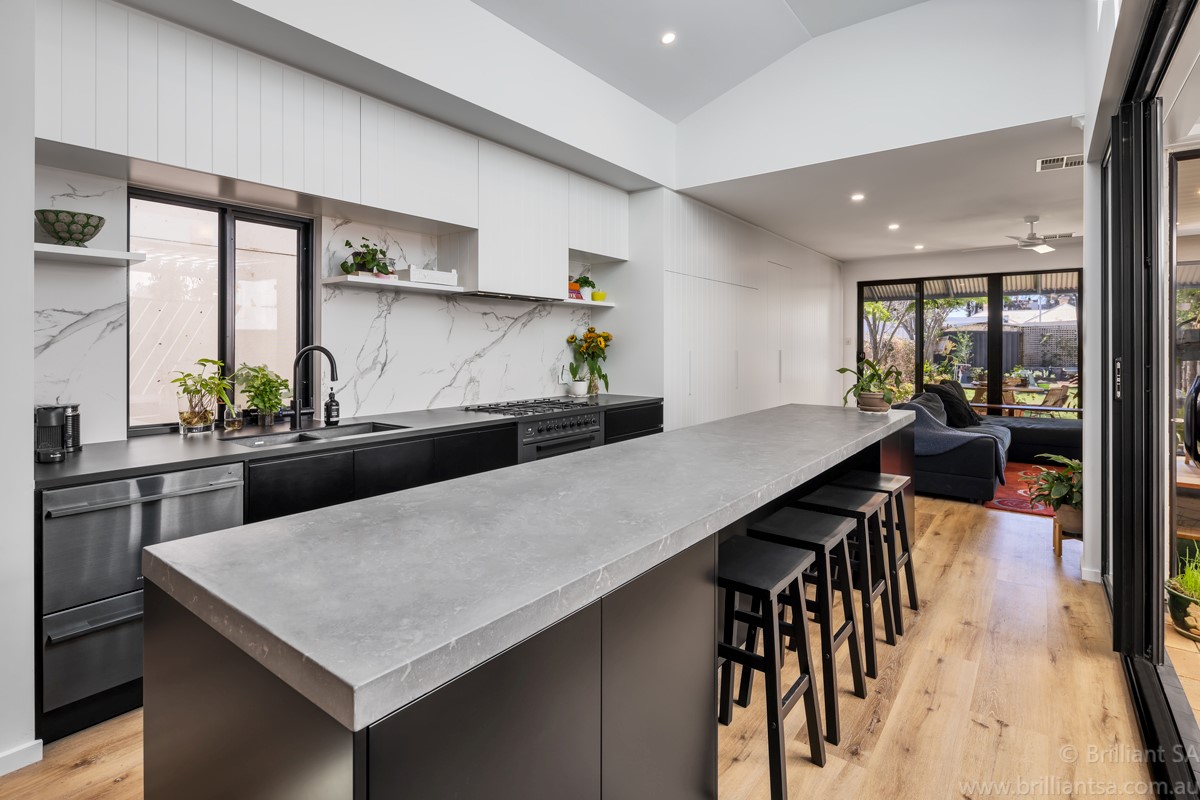
Custom Solid Concrete Benchtop on Island, Honed Finish
Timber
Timber has been a kitchen staple for millennia because of the warmth and texture it brings. It works especially well in classic and traditional kitchens, but can also suit Scandi and contemporary schemes depending on how it is used such as an island top or a butcher’s block section rather than the whole run.
Timber benchtops require ongoing maintenance to prevent water and heat damage, and need re-oiling or resealing through their life. Being softer, timber scratches but it sands back easily, which most other materials can’t claim.
Pros: Adds warmth and natural character, repairable, recyclable, timeless.
Cons: Requires ongoing sealing and care. Prone to scratching and vulnerable to standing water and heat.
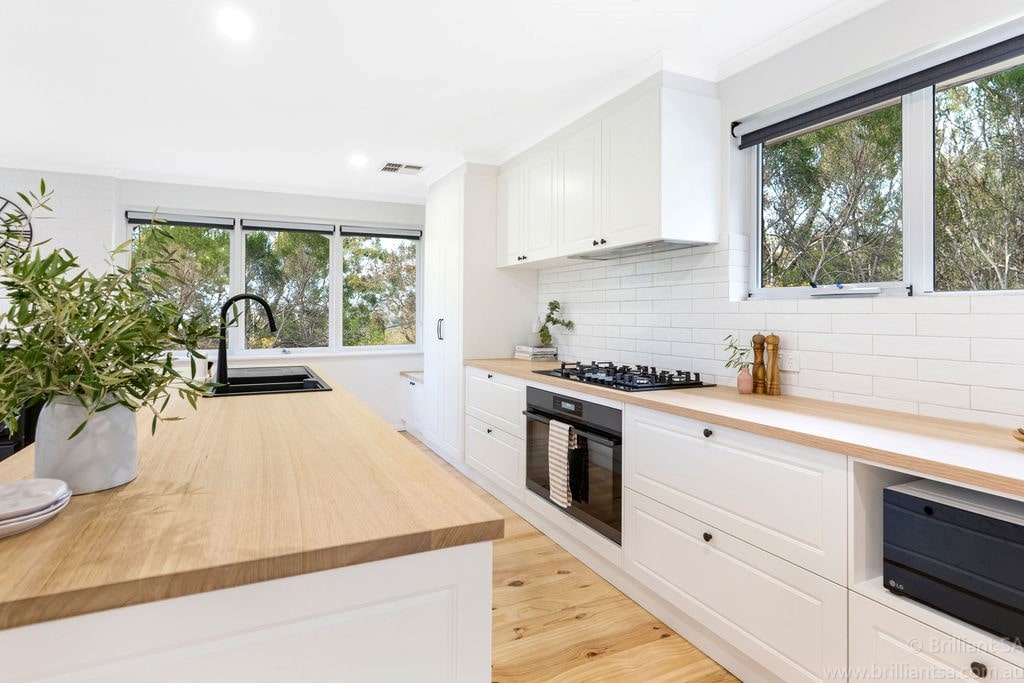
Custom Solid Tasmanian Oak Benchtops
Heat resistant laminate benchtops
Laminate benchtops are made from layers of resin-infused paper bonded under heat and pressure to a substrate. They’re the most cost-effective option and remain a genuinely good choice for busy family households and rental properties.
Modern laminate benchtops are resistant to scratches and stains, and are available in a wide range of colours, patterns and finishes such as realistic timber grains, stone looks, matte and textured surfaces. Kaboodle, for example, offers laminate benchtops in various colours and finishes. They’re affordable while providing a high-end look on a budget.
Pros: Very cost-effective, water and stain resistant, huge colour range, low maintenance. Laminate benchtops require only mild detergent and water for cleaning to help keep the surface pristine, with gentle regular cleaning and prompt attention to spills.
Cons: Laminate is budget-friendly but can burn or blister if exposed to high heat, so trivets are non-negotiable. It can lose its shine over time and is essentially unrepairable, replaced rather than repaired. Limited by sheet length, so allow for joins.
Top brands: Polytec, Laminex, Wilsonart and Abet Laminati.
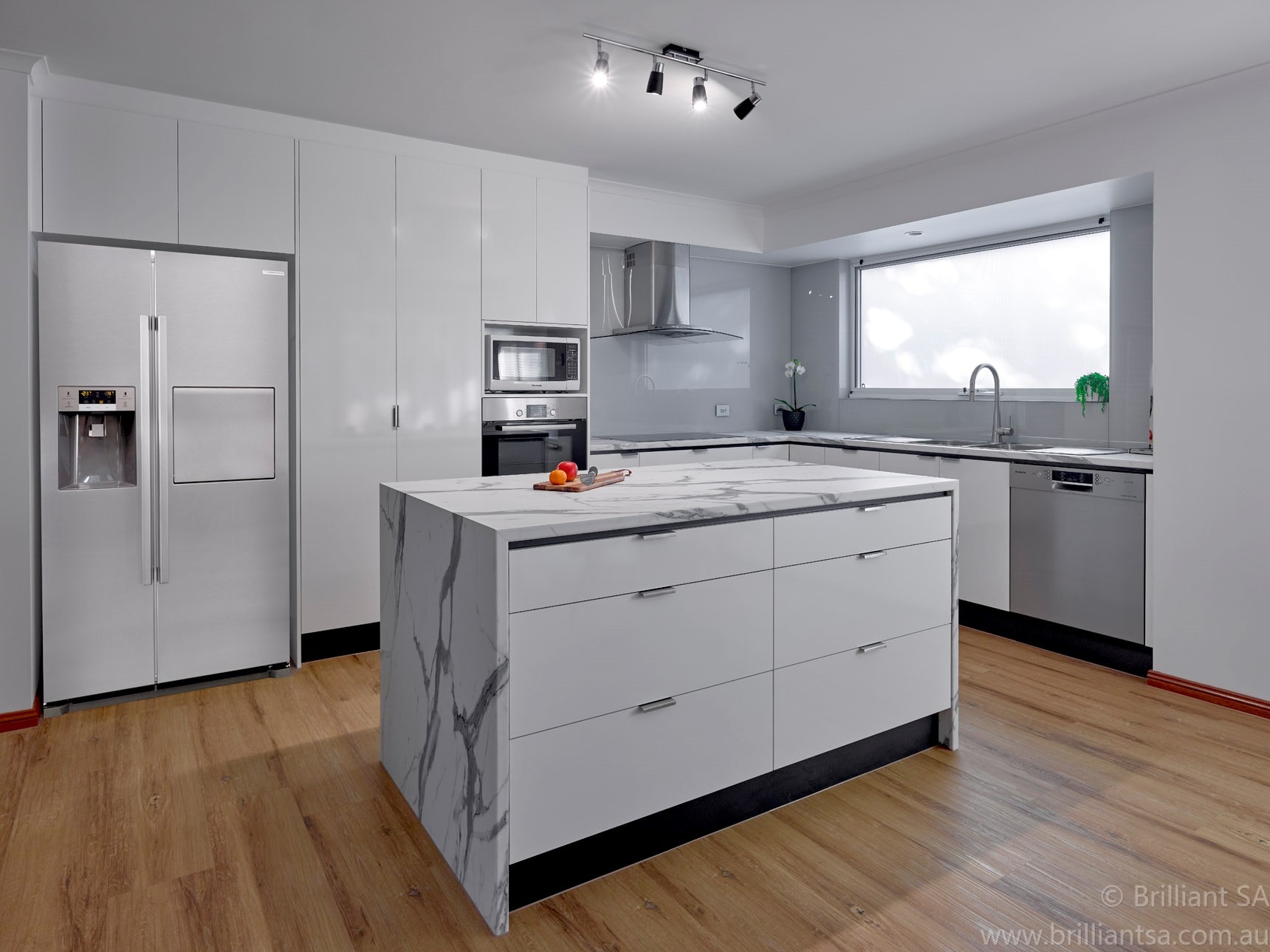
Laminate Matera Range, Polytec, in Calcutta Grey
Comparison at a glance
Material Heat resistant Stain resistance Sealing needed Repairable Relative cost Porcelain / sintered stone Excellent Excellent No Difficult High Natural stone (granite) Excellent Good (sealed) Yes, periodic Yes High Natural stone (marble)
Excellent Moderate Yes, regular Yes High Mineral (zero-silica) Very good
Excellent No Yes Medium–high Solid surface Poor Excellent No Yes Medium Stainless steel Excellent Excellent No Limited Medium–high Concrete Very good
Moderate Yes Yes Medium–high Timber Poor Moderate Yes, ongoing Yes Medium Laminate Poor Good No No Low
What happened to engineered stone?
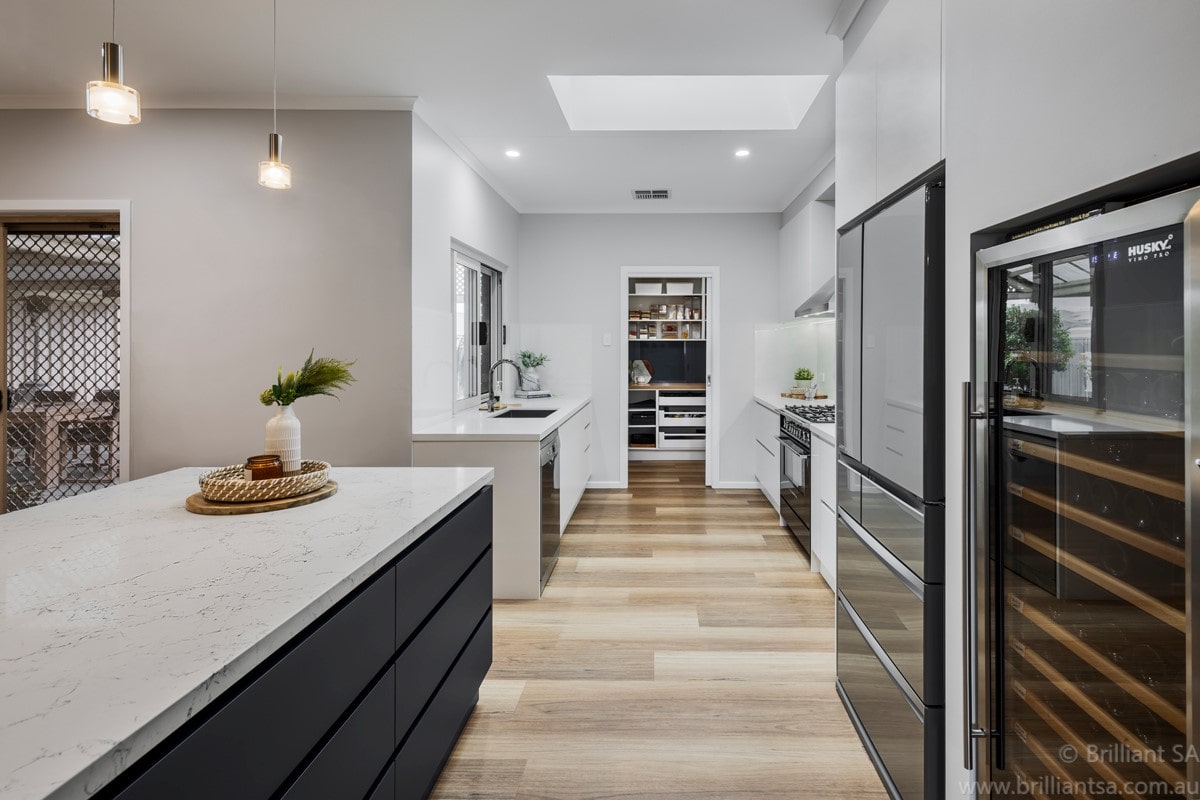
Engineered Stone on Kitchen Island, Caesarstone, in White Attica
Engineered stone, commonly called quartz, was for two decades the default benchtop in Australian kitchens. Quartz is engineered stone made from finely ground natural quartz bound with polymer resins and pigments. It doesn’t require sealing and resists everyday stains effectively, which is exactly why it became so dominant.
It is no longer available in Australia. The manufacture, supply, processing and installation of engineered stone benchtops, panels and slabs has been prohibited nationally since 1 July 2024, following the rise in silicosis among stonemasons who cut it. South Australia ran a transitional period through 2024 for pre-existing contracts; since then, no new engineered stone benchtops can be installed in SA homes. Importation has been prohibited since 1 January 2025.
The ban applies to manufactured products containing at least 1% crystalline silica combined with resin binders. It does not apply to natural stone, porcelain or sintered stone, because those contain no resin which is why Dekton, granite, marble and quartzite remain fully available. Existing engineered stone in your home is safe as long as it isn’t cut or disturbed; if it needs modification or removal, that work must be done by licensed operators under controlled conditions.
For homeowners, the practical outcome is straightforward: porcelain, sintered stone, natural stone and the new zero-silica mineral surfaces have absorbed the demand, and in most respects they perform better than what they replaced.
Benchtop elements and edges
Island Benchtops
Island benches add prep space while doubling as a casual eating zone, homework station or entertaining hub, with different widths and configurations giving customers more flexibility in how the island functions. They’re popular in open-plan designs because they zone the kitchen naturally and manage traffic flow. You can see how we’ve handled islands across a range of layouts in our portfolio.
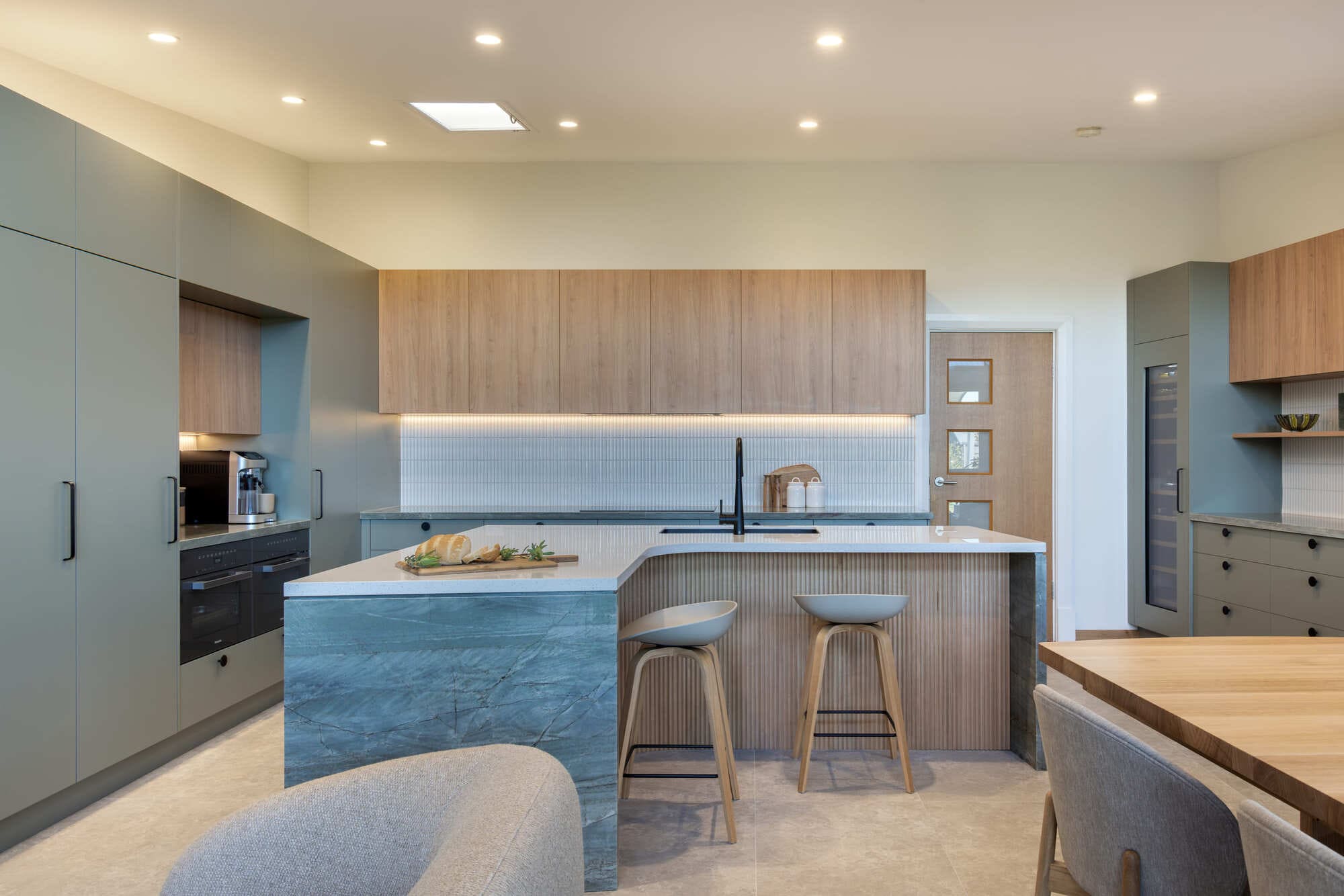 Warm & Inviting Japandi Kitchen, featuring Quartzie Stone waterfall ends and Maganite Solid Surface in Urban Habitat
Waterfall Benchtops
The benchtop continues over the edge of the cabinet and down to the floor, creating a seamless flow to the countertop. Best suited to contemporary kitchens, and particularly striking in a stone with strong veining.
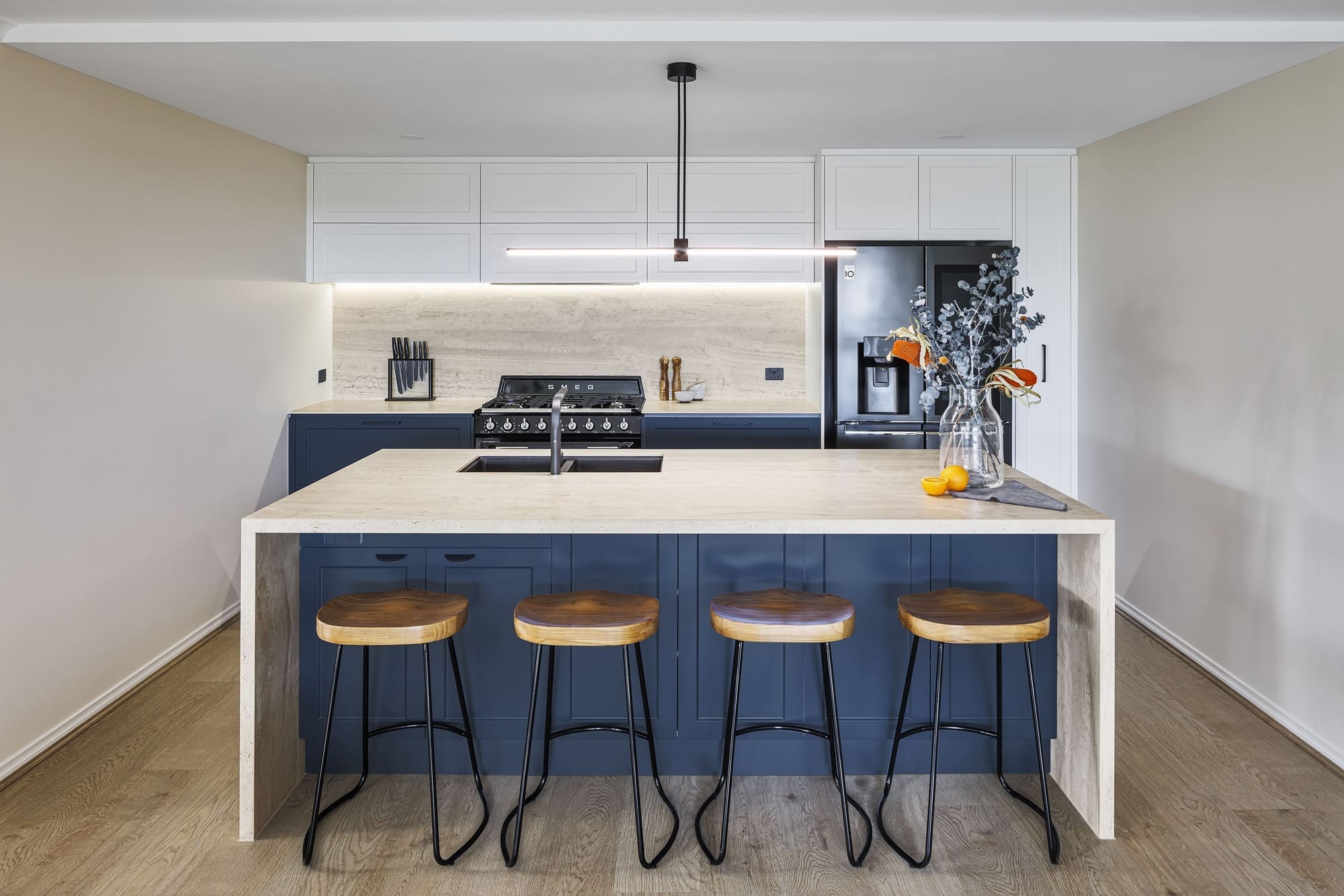
Silestone Kitchen Island and Benchtops, Firtina, Matte
Split Benchtops
Using more than one material, thickness or height is an effective way to combine a working bench with a bar or table at a different level, while creating visual interest through the contrast in materials.
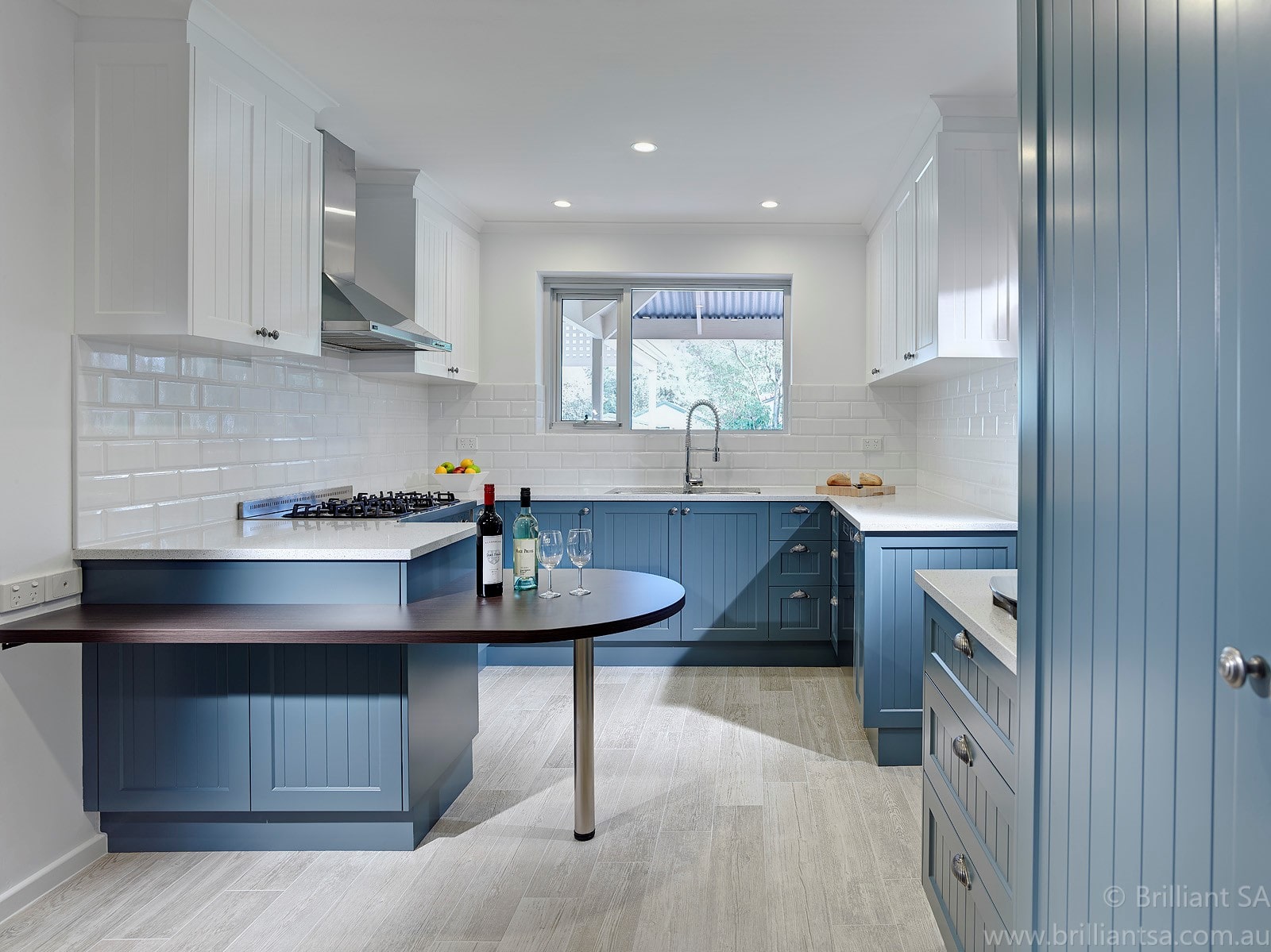
Split Benchtop (high): Caesarstone, Nougat (low): Polytec, Belgian Oak Matt. Functional for Both Working & Entertaining Purposes
Benchtop Edges
Edge options depend on the material chosen, as does the achievable thickness:
- Bullnose
- Half bullnose
- Pencil nose
- Pencil round
- Square edged
- Shark nose
- Lambs tongue
- Extra thick (wrap-around / mitred)
Kitchen Benchtop Trends
Current kitchen design is about warmth and comfort. Homeowners are spending more time in the kitchen and want an inviting, calming culinary space rather than a clinical one. Neutral tones, natural colours and a blend of textures and materials help elevate both comfort and day-to-day usability while creating a variety of focal points.
Statement islands remain strong, with bold veining and dramatic colour adding a slice of drama. Turning the island into a butcher’s block section is gaining ground, as is mixing timber warmth against a stone or porcelain perimeter to create a perfect balance of texture and contrast. Thicker benchtops continue to trend, with cantilevered ends for an extra sense of luxury.
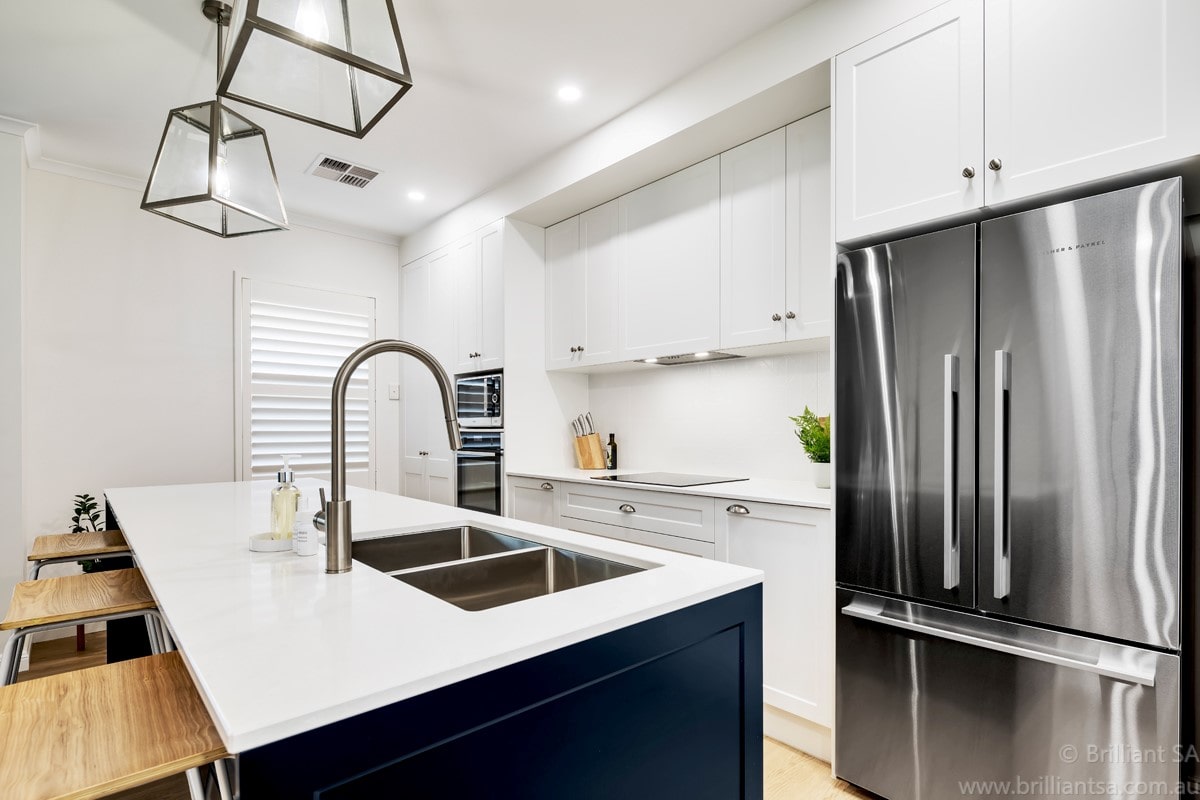
Warm & Inviting Hamptons Kitchen, featuring Engineered Stone Benchtop by Caesarstone, in Organic White
How to choose the right kitchen benchtop
Material selection shouldn’t be an afterthought as the characteristics and installation requirements of your choice feed directly into the overall design, so it needs to be settled early to improve both aesthetics and functionality. Work through it in this order:
- Budget. Laminate benchtops deliver a high-end look on a modest budget. Porcelain, sintered stone and natural stone sit at the premium end. Mineral surfaces land in between.
- Cooking habits. Heavy cooking habits require tough surfaces like porcelain or sintered stone, which handle hot cookware directly, or granite. This makes it easier to feel confident choosing a material that suits the way you cook. If you cook rarely and entertain often, a softer or more decorative surface is a reasonable trade.
- Style. Do you want the unique patterns and character of natural stone, the consistency and predictability of a manufactured surface, or the warmth of timber? Each choice should complement the whole scheme including cabinetry colour, splashback and flooring, so consider it in harmony with the kitchen rather than in isolation.
- Our 7-step process is built to sequence these decisions properly, and the best way to shortlist is to see and touch the samples. Visit our Adelaide kitchen showroom in Malvern, where we display the latest collections from the brands we work with so you can get a taste of the available collections.
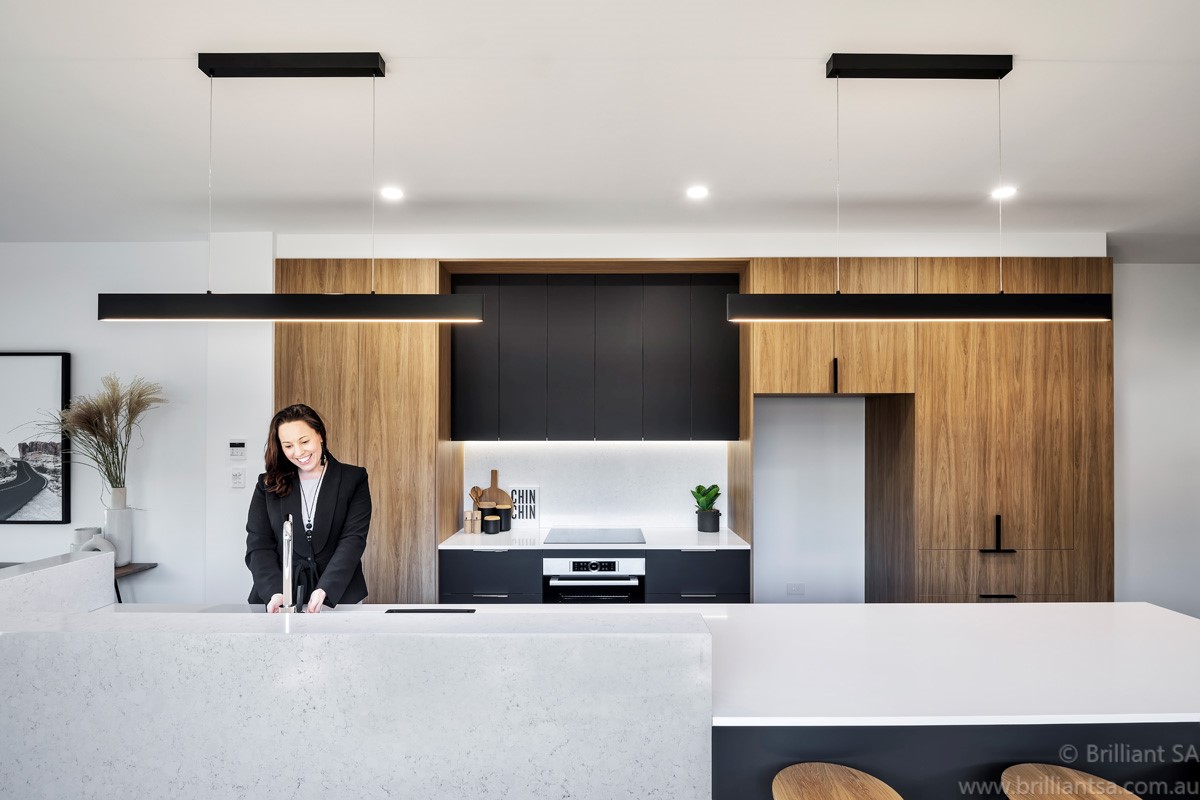
Villa Project Featuring Steedform, Caolino Benchtop & Steedform, Fino Venato Feature Stone
Caring for your benchtop
A few habits protect any surface:
- Use a cutting board. Even scratch-resistant surfaces will eventually show wear from direct knife contact.
- Use trivets. Essential for laminate, solid surface and timber; good practice for everything else.
- Clean with water and mild soap. Cosentino recommends cleaning surfaces with water and mild soap, and the same applies to most materials. Caesarstone surfaces are easy to clean with a simple wipe.
- Avoid harsh cleaners on laminate benchtops to prevent damage, use mild detergent and water only. Skip abrasive pads and bleach-based products.
- Wipe spills promptly on any porous surface. Red wine, citrus, oil and coffee are the usual culprits on marble and unsealed granite.
- Reseal on schedule. Granite, marble and concrete need periodic sealing; timber needs re-oiling. Your fabricator will advise the interval.
What Brilliant SA recommends
When we work with a client, we focus on the material that best suits the style of kitchen they want and the way they actually live and cook, so the final choice will suit both daily routines and cooking habits. There is no single best benchtop. But there is a right benchtop for your household, and the information above is the start of that conversation, not the end of it.
Our kitchen designers stay current on product developments, new collections and regulatory changes, so the recommendations we make are relevant and compliant. We work with tried and tested brands and suppliers across every material category, which means we can be candid about where each one performs, the key features and advantages we weigh, and where it doesn’t.
We’ve been renovating kitchens for Adelaide homeowners since 2001. Alongside our class-leading 10-year warranty, every client gets the Brilliant SA Peace of Mind Guarantee where we take full responsibility for every detail of your project.
If you’re weighing up surfaces for a bathroom as well, our guide to creating a Hamptons style bathroom covers how marble and stone behave in wet areas. And when you’re ready to start your dream kitchen and gather inspiration, talk to us today.
FAQs
There is no single best material as choosing a kitchen benchtop involves budget, cooking habits and style preferences, and the advantages are clearest when the material matches the kitchen’s intended use. Porcelain and sintered stone offer the best all-round durability and heat resistance; natural stone offers unique character; laminate offers the best value; timber offers warmth. High-quality benchtops in any of these categories will withstand daily wear and tear. No. The manufacture, supply, processing and installation of engineered stone benchtops, panels and slabs has been banned nationally since 1 July 2024, and importation has been prohibited since 1 January 2025. The ban does not apply to natural stone, porcelain or sintered stone. Existing engineered stone already installed in your home is safe provided it isn’t cut or disturbed. Porcelain, sintered stone and natural stone have absorbed most of the demand, alongside a new category of zero-silica mineral surfaces. Regulatory shifts have favoured zero-silica engineered alternatives as safer materials, and manufacturers have reformulated accordingly. It’s a manufactured mineral surface made without crystalline silica, so it can be fabricated safely and sold legally in Australia. Caesarstone Mineral™ is made from a blend of natural minerals and recycled materials including glass, and Cosentino’s Éclos is a mineral surface with zero crystalline silica content containing a minimum of 50% recycled materials. Porcelain and sintered stone. Dekton surfaces can withstand hot objects placed directly on them without damage, and Éclos is rated to 220°C. Natural stone and stainless steel also handle heat well. Laminate, solid surface and timber all require trivets, laminate in particular can burn or blister if exposed to high heat. Yes. Granite requires periodic sealing to prevent staining due to its porous nature. Some products remove this burden and Sensa stone benchtops have an exclusive stain-resistant treatment applied during manufacture. Marble countertops require maintenance because of their tendency to scratch and stain, and they etch on contact with acids like lemon juice and vinegar. We generally recommend marble for islands, butler’s pantries and low-traffic zones rather than the main prep area or a marble-look porcelain if you want the aesthetic without the upkeep. Modern laminate benchtops are resistant to scratches and stains and hold up well in family kitchens, staying pristine with proper care. The limitations are heat as they can burn or blister and repairability, since damaged laminate is replaced rather than repaired. For the price, the durability is very good. Laminate benchtops require only mild detergent and water. Avoid harsh cleaners, abrasive pads and bleach-based products, which will dull or damage the surface. Water and mild soap is the standard recommendation across the major manufacturers, including Cosentino. Caesarstone surfaces are easy to clean with a simple wipe. Avoid abrasive cleaners and anything strongly alkaline or acidic. Use a cutting board. Even on scratch-resistant surfaces, direct knife contact will eventually leave marks and on softer materials like timber, solid surface and laminate it will do so quickly. Yes. Timber benchtops require ongoing maintenance to prevent water and heat damage, including periodic re-oiling or resealing. In return, they’re the easiest surface to repair as scratches sand out. Concrete benchtops are popular for their industrial look and durability, and can be poured without joins in complex shapes. They are porous, so they need correct sealing and periodic maintenance to protect against stains. Heavy cooking habits require tough surfaces. Porcelain or sintered stone are the strongest all-rounders, handling heat, stains and scratches without sealing. Granite is a good natural alternative if you’re prepared to reseal periodically. Sleek kitchens benefit from uninterrupted porcelain or stone slabs. Large-format sintered stone like Dekton minimises visible joins, and a mitred waterfall edge helps create a perfect seamless look down the island. Yes. Caesarstone Mineral™ surfaces are manufactured with eco-friendly practices and contain a high proportion of recycled material such as glass. Cosentino’s Éclos uses a minimum of 50% recycled materials, with some colours approaching 90%. Timber and solid surface are also recyclable.What is the best material for kitchen benchtops?
Is engineered stone still legal in Australia?
What replaced quartz benchtops in Australia?
What is a zero crystalline silica benchtop?
Which benchtop is the most heat resistant?
Do granite benchtops need sealing?
Are marble benchtops practical in a kitchen?
How durable are laminate benchtops?
How do I clean laminate benchtops?
How do I clean a stone or mineral benchtop?
How do I stop my benchtop getting scratched?
Do timber benchtops need much maintenance?
Are concrete benchtops a good option?
What benchtop suits a heavy home cook?
What benchtop suits a sleek, minimal kitchen?
Are recycled or sustainable benchtops available?

Peter Sveinsson
With 35 years building and design experience, Peter is Co-founder and CEO of Brilliant SA. He is Brilliant SA's Design Director and business strategist.