


A Mirror is a Designer’s Secret Weapon!
Mirrors can transform a space. Used well, one mirror can brighten a room, open it up and fix proportions that don’t quite work. That’s why our designers treat a mirror as one of the most effective tools we have, not just a finishing touch.
A mirror is simply glass with a reflective backing, cut to size and finished with polished or bevelled edges. The difference comes from what you choose, where you position it and how you install it.
Why mirrors are a designer’s secret weapon
A mirror placed opposite or beside a window amplifies natural light and bounces it deeper into the room. A wall mount mirror also creates the illusion of more space. That makes it an easy win in compact bathrooms, ensuites and powder rooms.
Mirrors help with balance, too. A pair of mirrors above a double vanity adds symmetry, while one large mirror becomes a focal point on its own. A well-placed mirror can even hide wall imperfections or awkward architectural details, which is a handy trick in older Adelaide homes.
Choosing the right mirror
Start with scale. A mirror’s dimensions should match or complement the furniture around it. As a guide, a bathroom mirror usually sits no wider than the vanity below. Then choose a shape that suits your decor. Rectangular mirrors suit clean contemporary lines, round or arched mirrors soften a room, and freeform shapes make a statement.
Let's Get StartedWall mount mirrors
The wall mount mirror is the most common option, and it can be made to order in almost any size or shape. It can be small enough to back a niche or large enough to cover a whole wall. A wall-to-wall mirror seems to remove the wall altogether, adding depth and light. In a busy family bathroom, one large mirror lets more than one person get ready at the same time.


Floating and backlit mirrors
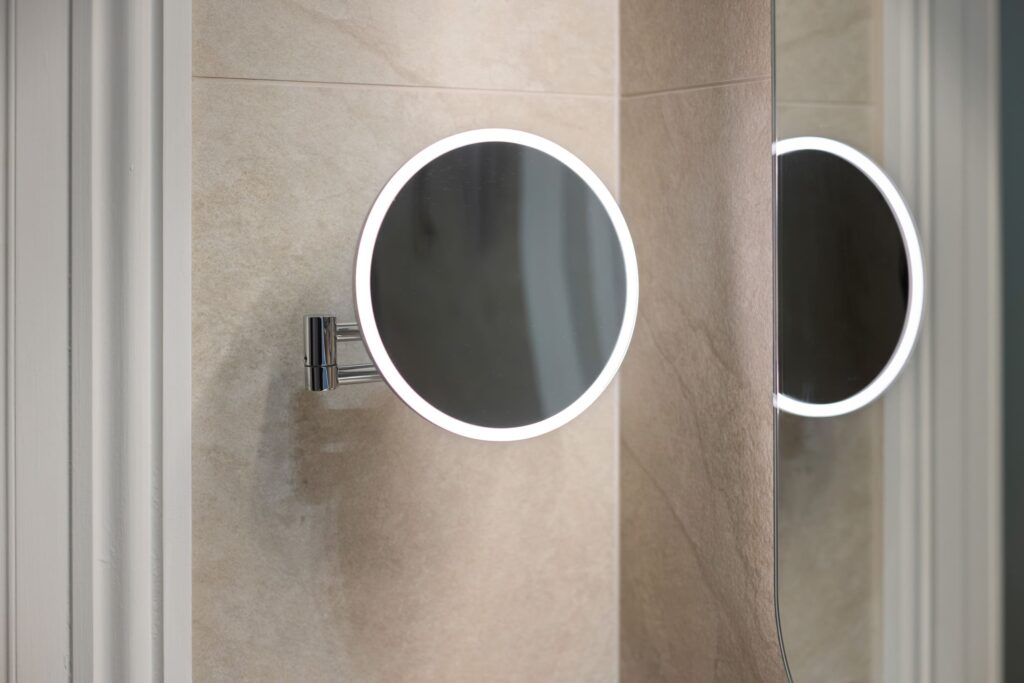
A mirror mounted slightly off the wall appears to float, and the gap leaves room for backlighting. Think carefully about light quality. Dimmable, colour-adjustable LEDs add mood, while a warm-white task light gives an accurate reflection for shaving and make-up. A magnifying mirror with integrated surround lighting gets rid of the shadows that downlights cast.


Mirrored shaving cabinets
If you need storage, a mirrored cabinet keeps the vanity top clear and can hide power points for toothbrushes and shavers. Recessing it into the wall cavity saves space and gives a cleaner finish. Finger-pull doors mean fewer fingerprints to clean.
Let's Get Started


Framed mirrors
Frames add character, and the frame material should suit the rest of the room. Timber adds warmth, matte black adds contrast, and brushed brass gives a softer luxe look. PVD (physical vapour deposition) coatings on metal frames resist wear and improve durability, so the finish still looks new years from now. Framed mirrors are a signature of the Hamptons style bathroom.


Magnifying mirrors
A magnifying mirror can be the perfect accessory to a bathroom. Available in multiple designs and magnifications to meet every need. They are great for applying makeup or shaving, particularly in a room with limited natural light. Integrated surround lighting will eliminate shadows that regular downlights or overhead lighting can cause.


Smart mirrors
Smart mirrors have touch controls for different lighting modes, anti-fog pads that keep the glass clear after a shower, and in some models Bluetooth audio. Check the specifications early, because most need a dedicated power point wired in during the renovation.
Where to position a mirror
Mirrors are useful throughout the home, not just in the bathroom. In a hallway, a long mirror on a side wall makes a narrow space feel less confined. In a bedroom, a full-length mirror creates a dressing area without taking up floor space. Both are easy additions to a full home renovation.
Height matters. A mirror should be centred at eye level, typically around 1500–1600mm from the floor, adjusted for the people who will use it most. In a bathroom, line the mirror up with the vanity and tapware so the details align.
Mirror installation: how to attach it safely
Secure fixing with the right hardware is essential for safety. Mirror installation starts with the weight of the mirror, because how much weight a wall can support depends on the mirror and on what’s behind the plasterboard.
- Heavy mirrors should be fixed into studs, found with a stud finder, or into a timber noggin installed during framing.
- Framed mirrors are usually hung with hooks, D-rings or a French cleat, which spreads the load.
- Frameless bathroom mirrors are often attached with double-sided mounting tape and a mirror-safe silicone. Clips or a bottom channel can add extra support.
Always use a neutral-cure silicone designed for mirrors. Standard acid-cure products can damage the silvering and cause black edges over time. For large pieces, or mirrors fixed over tiles, professional installation is the safest choice.
Let's Get StartedDesigning your bathroom with Brilliant SA
We plan mirrors, lighting and power as part of the full design, so everything is positioned and wired before any tiling starts. Find out how our design and build process works, browse our portfolio, or visit our bathroom showroom. Contact us today to discuss your bathroom renovation. We’re always happy to help.
FAQs
How do mirrors make a room look bigger?
Wall mount mirrors reflect light and views, which creates the illusion of more space in compact rooms. Placed opposite or next to a window, they amplify natural light.
What size and shape of mirror should I choose?
Choose dimensions that match or complement the surrounding furniture, and a shape that suits your existing decor. Large mirrors work well as focal points.
How high should a mirror be hung?
A mirror should be centred at eye level for the best viewing, typically around 1500–1600mm from the floor.
How do I choose a mirror frame?
Pick a frame material that relates to the overall room design so the space feels cohesive. PVD-coated metal frames resist wear and last longer.
Can mirrors hide wall imperfections?
Yes. A well-placed mirror can hide wall imperfections or architectural flaws, and it can also improve visual balance and symmetry in a room.
How can a mirror help a narrow hallway?
Used strategically, mirrors help narrow hallways feel less confined by reflecting light and adding depth.
How are mirrors attached to the wall?
Installers use hooks, cleats or adhesive. Bathroom mirrors are often attached with double-sided adhesive tape and mirror-safe silicone. Heavy mirrors need a stud finder so they can be fixed securely, because the right hardware is crucial for safety.
Does lighting matter when choosing a mirror?
Yes. Consider the light quality in the room, since both natural and artificial light affect how a decorative mirror looks and performs.

Peter Sveinsson
With 35 years building and design experience, Peter is Co-founder and CEO of Brilliant SA. He is Brilliant SA's Design Director and business strategist.