

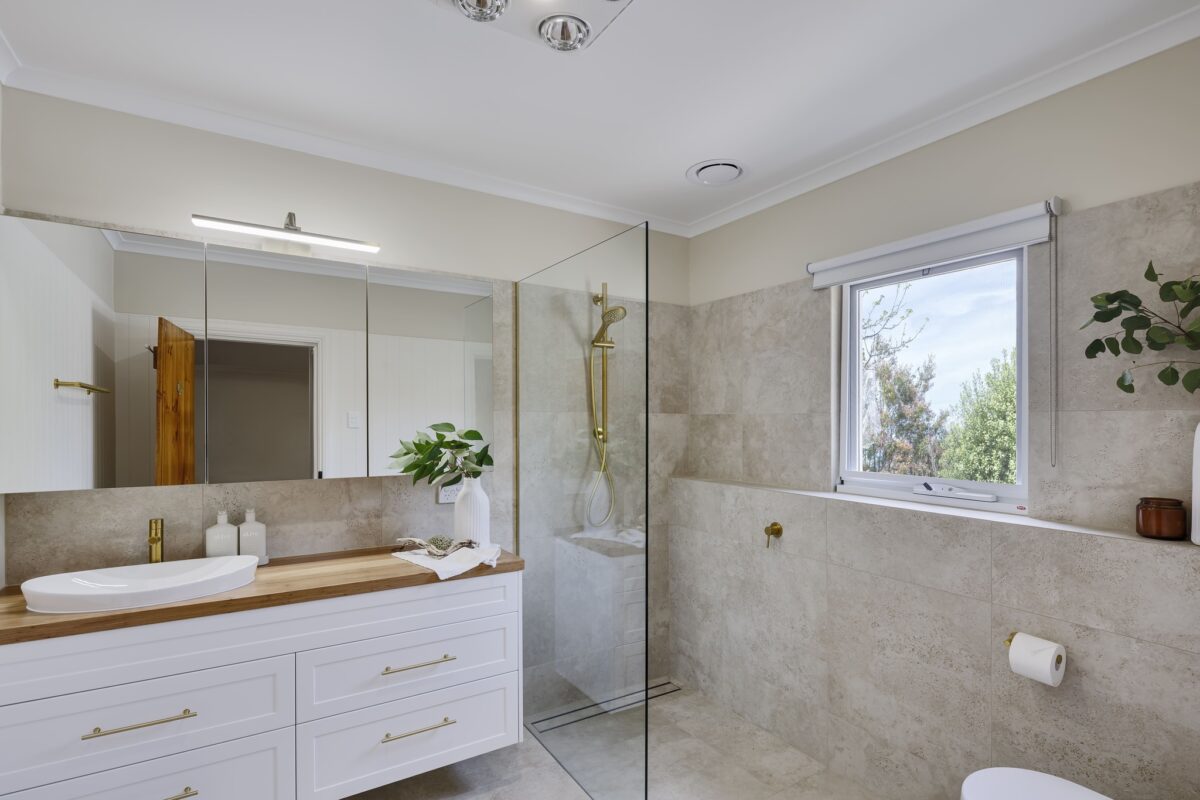
LETTING OFF STEAM – MANAGING BATHROOM STEAM IN WINTER
We all love a hot shower in the colder months. Turning the temperature up a notch and staying in a few extra minutes is one of winter’s small pleasures. The steam itself isn’t the problem. Trouble starts when that steam turns into condensation on cold walls, windows and mirrors.
Every winter we’re asked how to manage bathroom steam. The answer comes down to a few key factors, and planning for them helps whether you’re designing a new bathroom or making the most of the one you have.
What causes bathroom condensation and moist air?
Condensation forms when warm, humid air meets a cold surface and turns from vapour back into liquid. It’s the same process you see on the outside of a cold drink. Warm air can hold more moisture than cold air, so as moist air cools it sheds the excess as droplets. In the bathroom, you see this as fogged mirrors, streaming windows and water running down the walls.
Why condensation is a problem
The short-term problems are obvious. You can’t use a fogged mirror, water dripping down walls looks unsightly, and the room and your towels never properly dry.
The long-term problems are more serious. Water left sitting on the bottom edge of a mirror eventually attacks the silver backing, causing it to discolour and peel. (See our guide to choosing and installing bathroom mirrors.)
Permanently damp patches on walls and the ceiling are ideal for mould growth, and so are shower alcoves that stay damp. Once mould takes hold, it’s bad for your health and difficult to get rid of.
The three key factors
Managing steam comes down to three things:
- The amount of steam generated
- The temperature of the air and surfaces in the room
- Air flow
Prevention is always better than a cure, so let’s look at each one.
Request a Complementary Consultation1. The amount of steam generated
- Shower head type. Large overhead rain showers break the spray into fine droplets and produce far more steam than traditional shower heads.
- Shower head height. The further the water falls, the more steam it creates.
- Water temperature. Water loses heat as it falls, so we tend to turn the hot water up to compensate.
- Shower screens. An enclosed shower keeps warm air inside the alcove, so less steam escapes into the room. A steam shower, by contrast, is designed to produce steam and needs dedicated ventilation.
A high volume of steam isn’t necessarily a problem, but it has to be managed. Simple habits also help: keeping showers to a few minutes and using a slightly lower temperature produce less steam.
2. Air and surface temperature
Condensation forms when warm, humid air hits cold surfaces, so warmer surfaces mean less condensation. Base-level heating makes a huge difference.
-
- Construction and insulation. Some building methods retain heat better than others. Insulating the walls, ceiling and floor is vital for an efficient home.
- Room size and ceiling height. A large air volume is harder to heat.
- Heat sources. Floor heating, hydronic radiators and ducted heating warm the room itself. Most heated towel rails only warm the towels, though some are powerful enough to heat the room. Infrared heat lamps warm the person standing under them, not the room.
- Bathroom location. A bathroom in the middle of the house gets ambient heat from the rooms around it. One away from heated living areas doesn’t.
- Heating in the rest of the home. This sets the temperature of the air drawn into the bathroom through ventilation.
3. Air flow and ventilation
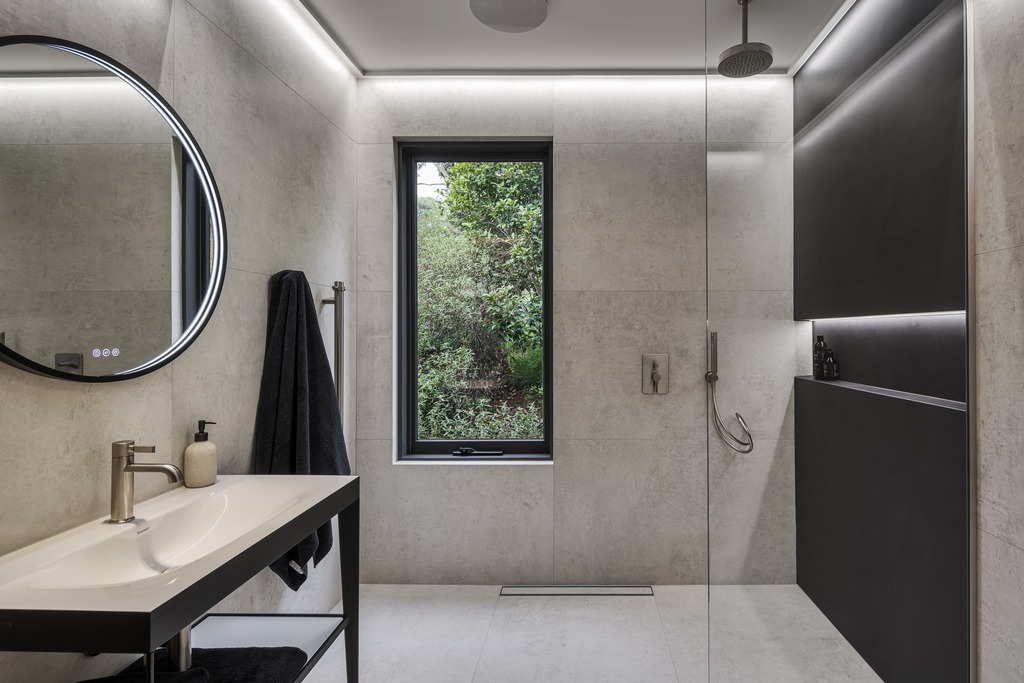
To control steam, your bathroom needs good air flow. In winter, natural ventilation through a window is rarely enough. You need mechanical ventilation.
- Exhaust fan type and capacity. These vary enormously, so the unit should be sized to your room and shower.
- Fan location. Air should be drawn through the room and across the shower, from the air supply to the fan.
- Air supply. The best air supply is a gap under the door, usually 10–15mm.
- Heat-recovery ventilation. A heat-recovery ventilator (HRV) exhausts damp air while using its heat to warm incoming fresh air. It’s a good option for steam showers and well-sealed homes, and can also help manage moisture from nearby cooking.
An open window during a winter shower works against you. It draws in cold air, which cools surfaces and holds less moisture. It’s better to air the room briefly once the steam has cleared.
No ventilation system works unless you use it properly, which typically means starting it before the shower and letting it run long enough to clear moisture. Turn the exhaust fan on before you start the shower, and leave it running until the steam and condensation have cleared.
Let's Get StartedEveryday tips to manage bathroom steam
- Run the fan before and after every shower. A timer switch makes this easy and can save you extra cleanup from lingering moisture.
- Keep the home moderately warm. Close the bathroom door while you shower to contain the steam, then open it afterwards so warmer air can flow in.
- Squeegee or wipe down walls and the shower screen after each shower.
- Hang towels spread out, ideally on a heated towel rail, and avoid drying washing or clothes in the bathroom because they add extra moisture.
- Clean the exhaust fan grille regularly so it keeps working effectively.
- Use a dehumidifier in bathrooms that stay damp.
Start with good design
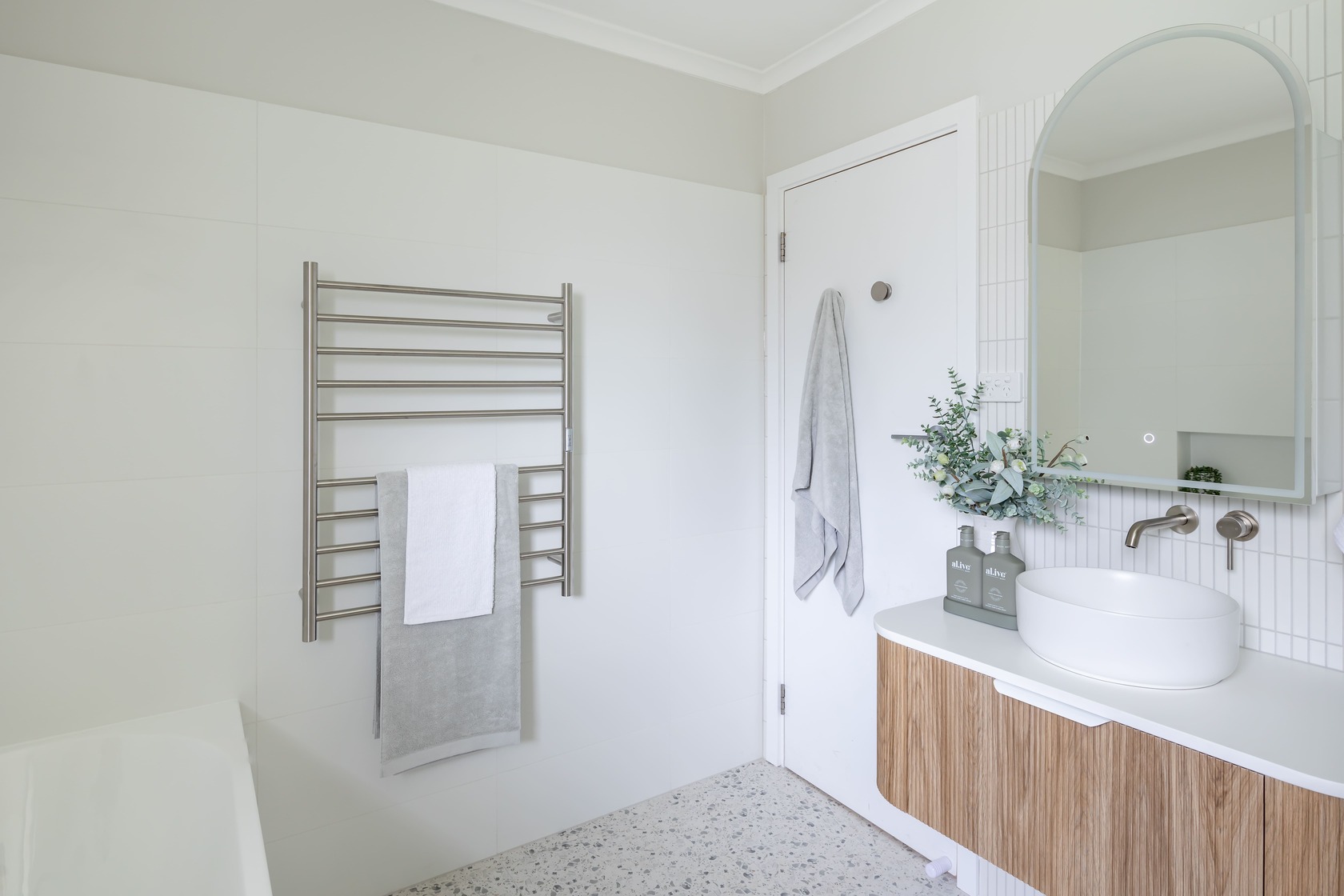
Steam is easiest to solve at the design stage, when you plan a warmer, more functional bathroom space. Choosing the right fan capacity and position, underfloor heating, a heated towel rail, a shower screen, good insulation and a heated demister mirror together make the biggest difference. Correct installation matters just as much as the products, because the right ventilation systems also need to be properly installed.
We plan heating and ventilation into every bathroom renovation as part of our design and build process. If you’re renovating the laundry as well, the same principles apply to a laundry renovation. Browse our portfolio, visit our bathroom showroom, or contact us to get started.
Request a Complementary ConsultationFAQs
How do I stop my bathroom from steaming up in winter?
Run the exhaust fan properly, before and after each shower. Keep the bathroom warm to reduce condensation, and close the door while you shower to contain the steam. Shorter showers and a lower shower temperature also produce less steam.
Should I open the bathroom window in winter?
Cracking a window slightly can help vent humid air, and opening windows regularly helps balance heat with fresh air. In winter, though, cold air cools surfaces, so open the window briefly after the steam has cleared rather than during your shower. Condensation often shows up overnight and may be obvious when you wake.
How long should I run the exhaust fan after a shower?
Extractor fans should keep running after a shower until the excess moisture has cleared—for example, leave the fan on for 15 to 20 minutes after the room looks clear. Fans also need regular maintenance to work effectively.
Do heated towel rails reduce humidity?
Yes. Towel warmers keep towels dry and reduce the humidity that can lead to mildew. Damp towels should be spread out rather than bunched up, so they don’t add humidity to the bathroom.
Will a dehumidifier help with bathroom condensation?
Yes. A dehumidifier can remove excess moisture and effectively reduce indoor moisture levels and condensation.
What is a heat-recovery ventilator, and can it handle a steam shower?
A heat-recovery ventilator reduces relative humidity by exhausting damp air, and it can manage the moisture from a steam shower; as a practical matter, whether the existing unit is enough depends on its capacity and balancing.
A timed switch can run it at high speed when needed. That usually calls for adjustment rather than replacing the unit. It should be properly balanced so air intake and exhaust are equal. In cold weather, a humidity setting of around 30% RH helps prevent condensation.
Are steam showers good for you?
Steam showers are popular for relaxation, and even a short session can feel restorative after a long day. Many people also say they help with circulation, breathing comfort and skin health, with a spa-like bath experience being part of the appeal. They produce a lot of moisture, though, so they need dedicated ventilation.
How do I prevent mould after showering?
Use a squeegee to wipe down wet surfaces after showering, run the exhaust fan until the room is dry, and keep the bathroom warm.

Peter Sveinsson
With 35 years building and design experience, Peter is Co-founder and CEO of Brilliant SA. He is Brilliant SA's Design Director and business strategist.